Launch offer — valid today only

Study for NICET Inspection and Testing of Fire Alarm Systems, Level I and Level II With Every Concept Drawn Step by Step!

The control unit, alarm vs. supervisory vs. trouble, battery calculations, smoke and heat detectors, horns and strobes, Class A vs. Class B, supervising stations and elevator recall: in the code, it's a wall of text. Here each topic fits on one page, with the drawing and what you need to remember. 65 illustrated pages.

YES, I WANT TO STUDY WITH DRAWINGS

🔒 Secure checkout · PDF by email · 30-day guarantee

One topic per pagethe drawing shows you how the system works and the text walks you through it
65 illustrated pages11 parts, from your NICET exams to exam day
Up-to-date sourcesNICET ITFAS content outlines (Oct. 2024) and the NFPA 72 edition on NICET's list

This Is What the Pages You Will Study Look Like

One topic per page, the drawing that shows you how it's done and the boxes with what you need to know:

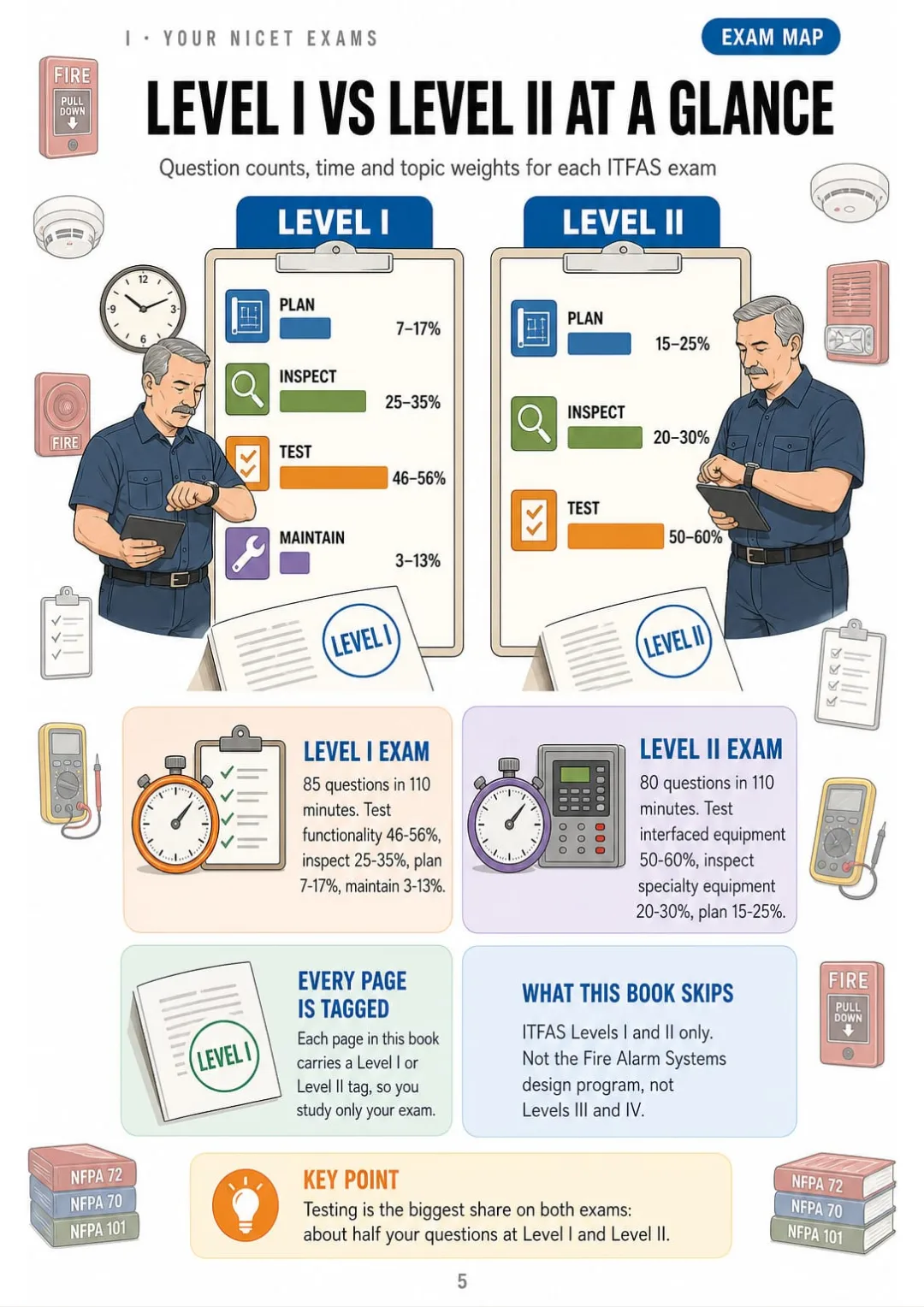
Level I: 85 questions, 110 minutes · Level II: 80 questions, 110 minutes · testing weighs most in both
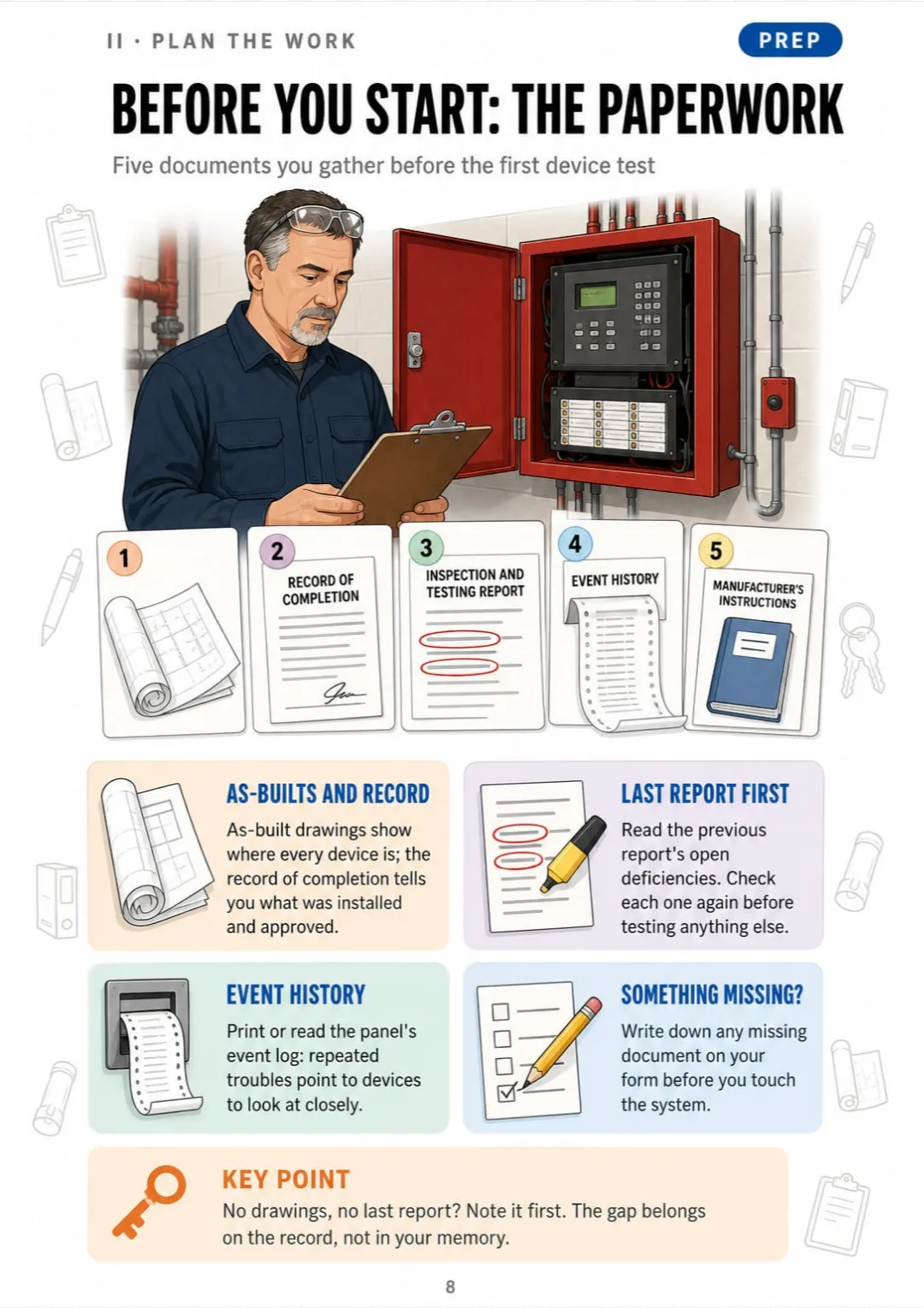
As-builts, record of completion, last report, event history and manual: gathered before the first test.
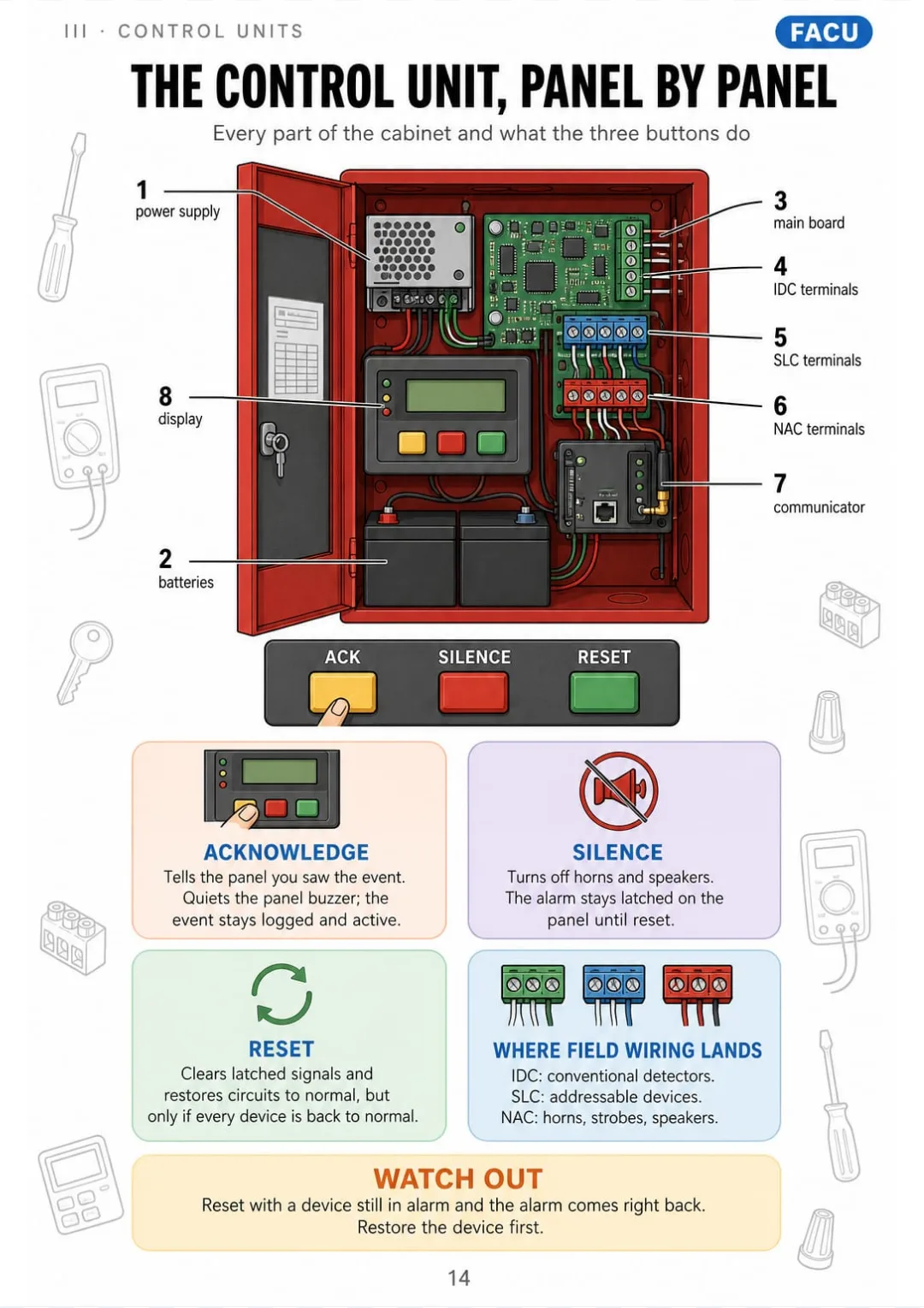
The FACU cutaway: 8 labeled parts plus acknowledge, silence and reset explained.
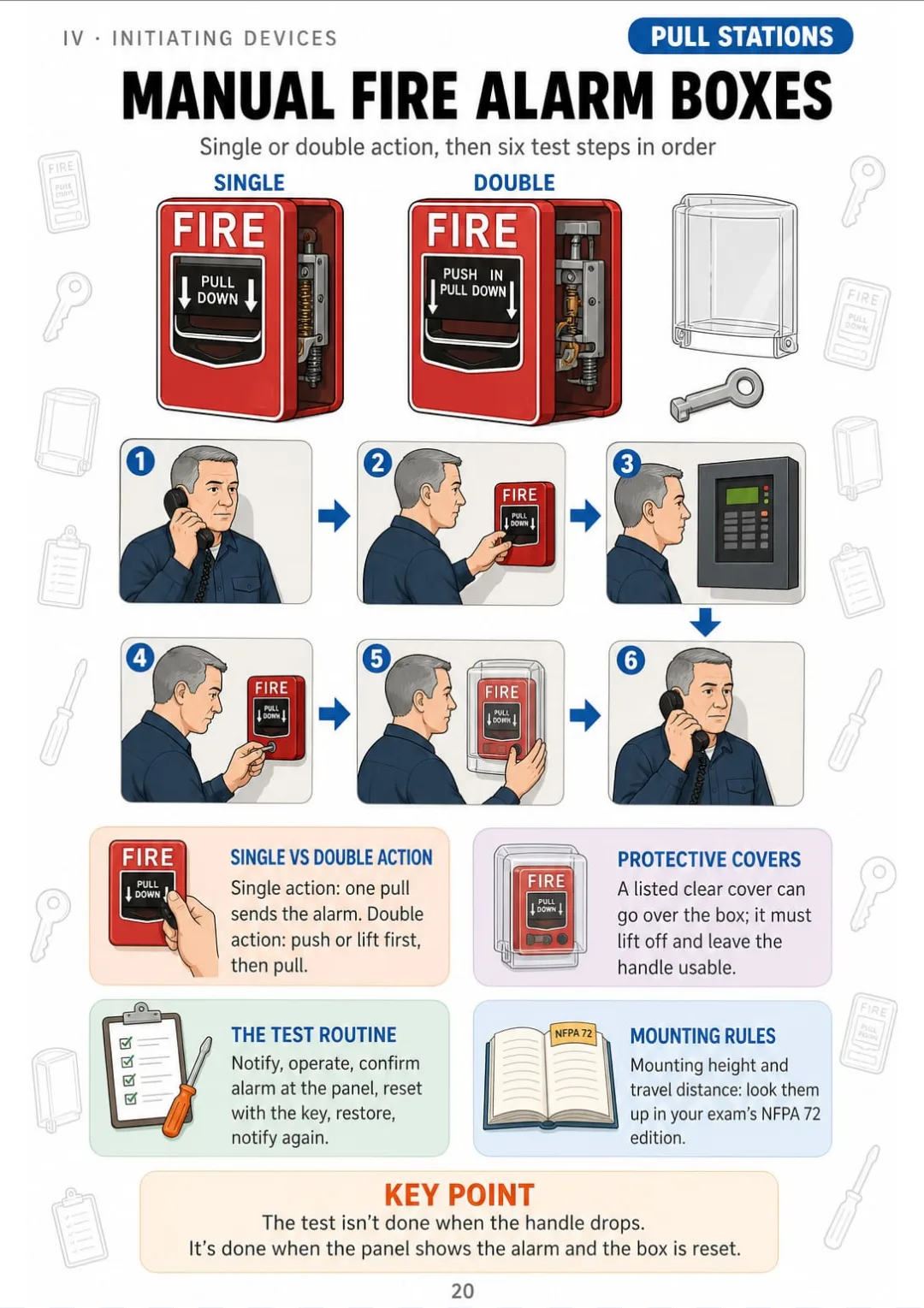
Single vs double action, the reset key, and the 6-step pull station test
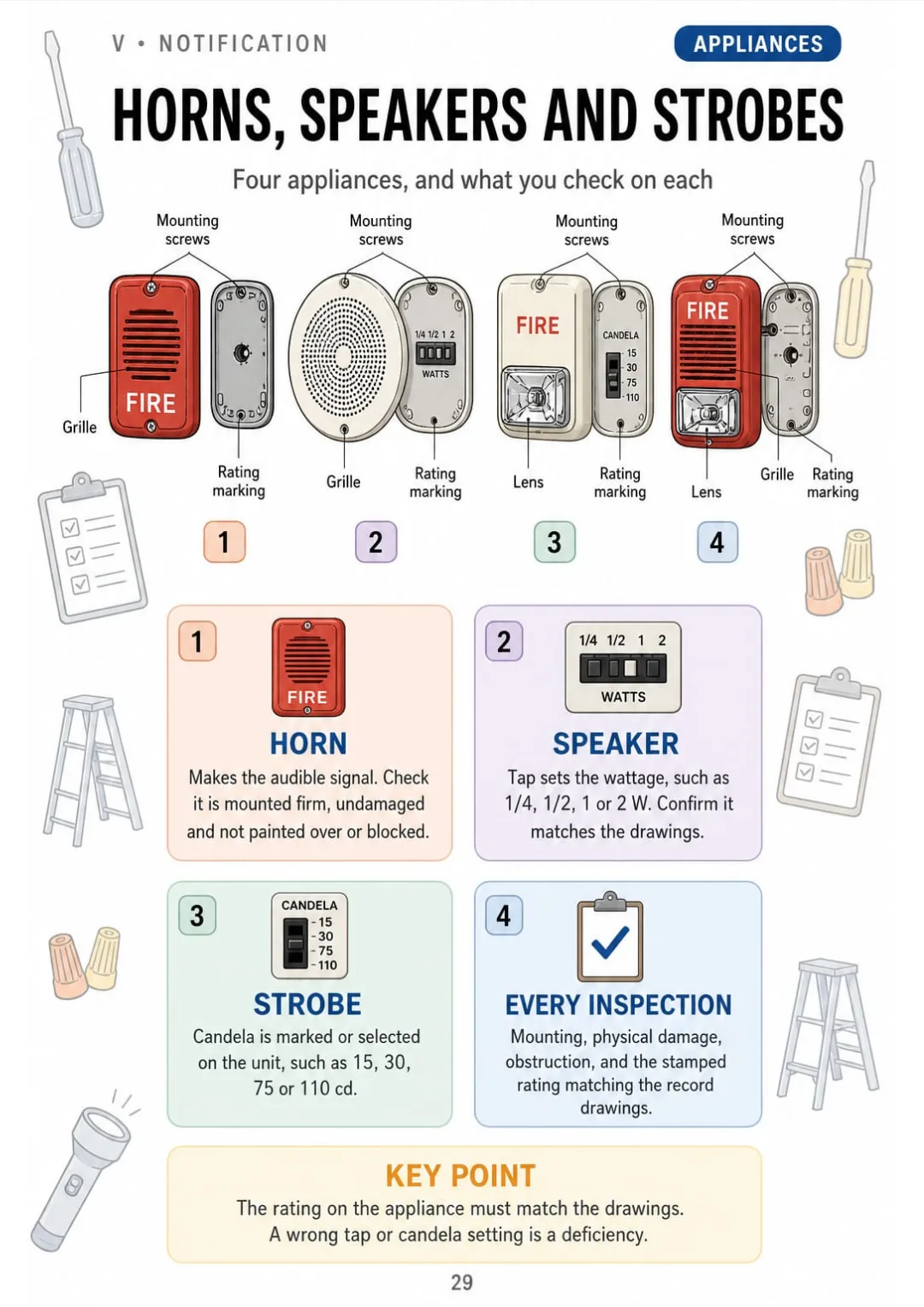
Horn, speaker, strobe and combo: what you inspect on each, drawn on one page.
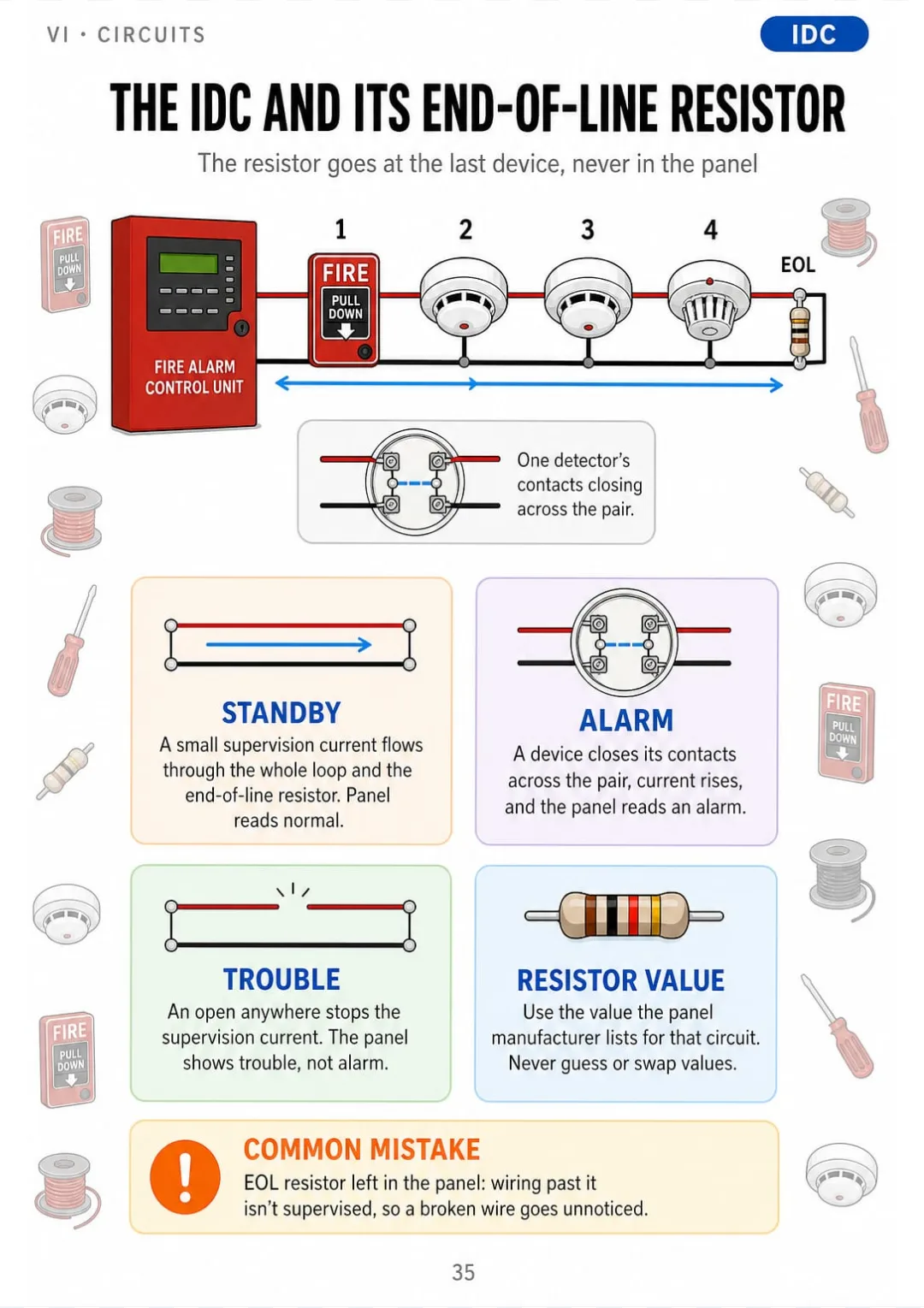
Class B initiating circuit: end-of-line resistor at the last device, open = trouble, contacts closed = alarm.
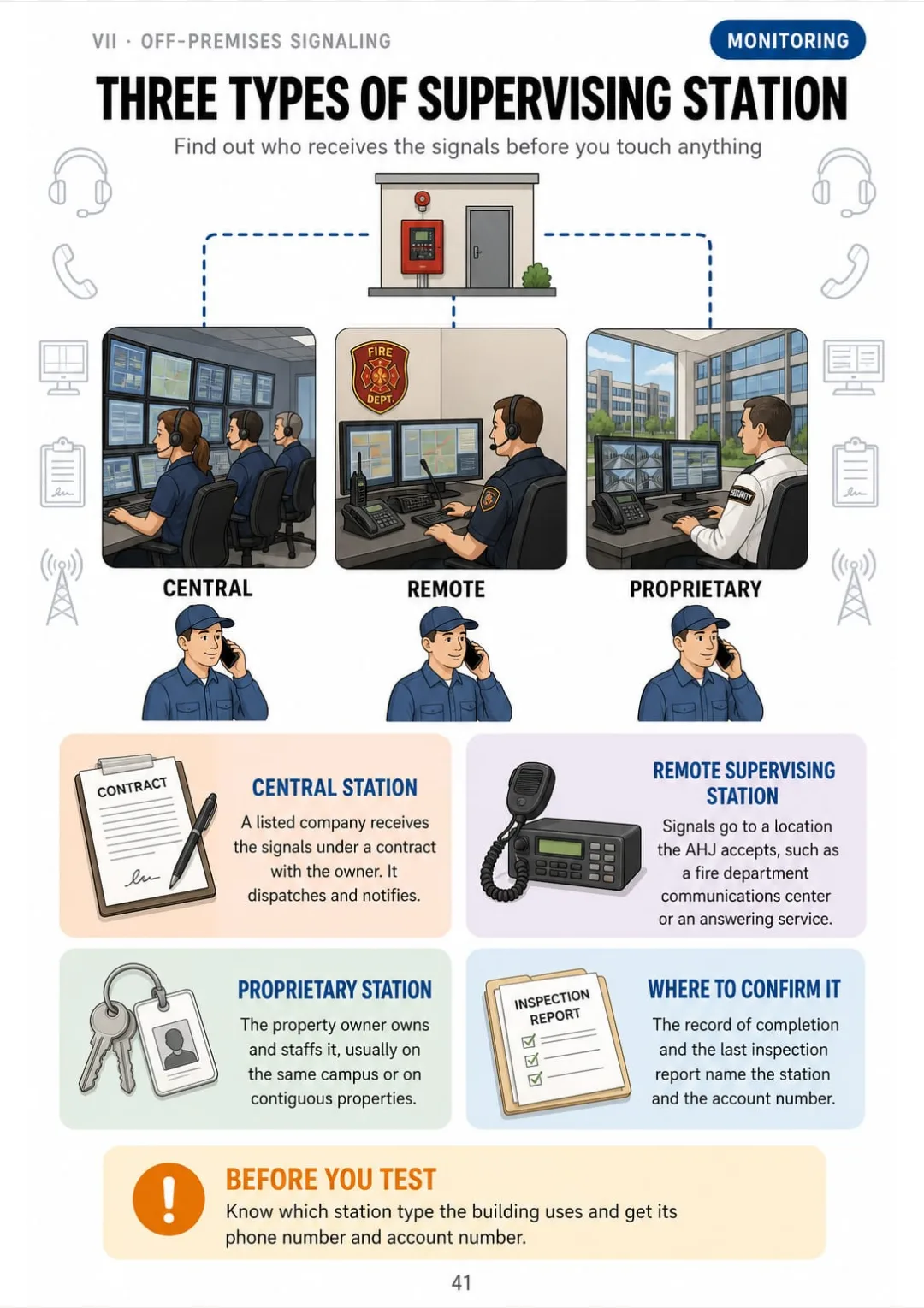
Central, remote and proprietary stations drawn side by side, each with who you call
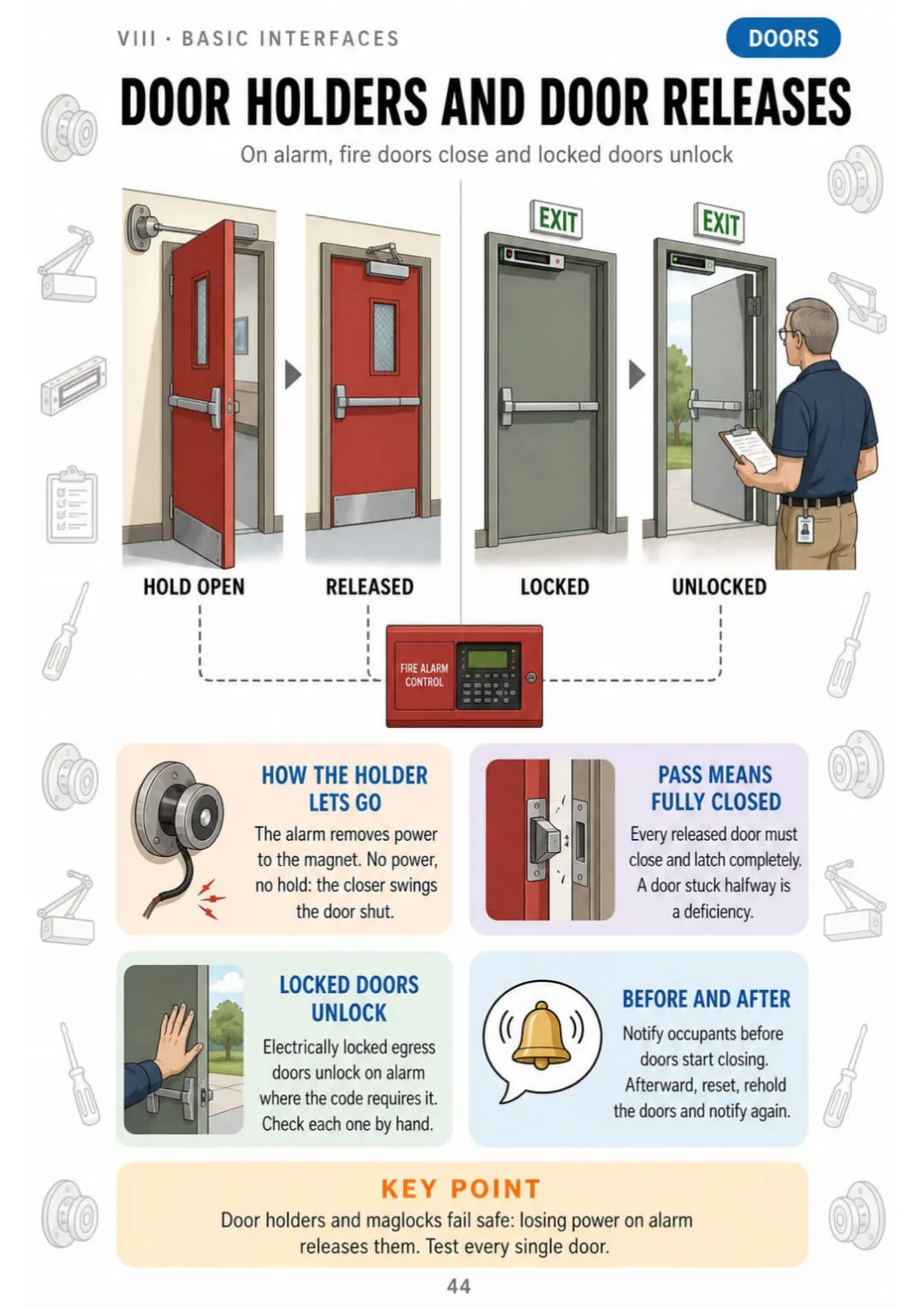
Magnetic holder vs electric lock: both release when the alarm cuts their power.

Swipe to see more →

These are real pages from the book. The table of contents is the full one: 11 parts and 61 topics.

It's Not That You Can't Remember. It's That Nobody Put It in Order.

You've silenced and reset hundreds of panels. Then a practice question asks if a closed valve is supervisory or trouble, and you read the battery section three times...

...and you still second-guess the signal and leave the battery math half done. In the code it's just lines of text, one after another.

The FACU cutaway: 8 labeled parts plus acknowledge, silence and reset explained.

Here the control unit is a single page, cut open: 8 labeled parts, with acknowledge, silence and reset explained right beside them.

And on the pages next to it, every system gets its own: the batteries, the initiating circuit with its end-of-line resistor, the pull station, the horns and strobes, and the supervising station.

First you understand why it works that way. Then the order sticks on its own.

SEE THE DIFFERENCE

Stop memorizing procedures you can't picture:

THIS
  • Pages and pages of dense text
  • Procedures without a single drawing
  • On the exam, you don't know where to start
Prior to the commencement of any inspection or testing activity, the technician shall obtain and review all applicable system documentation, including but not limited to the as-built drawings, the record of completion, the most recent inspection and testing report, the event history log retained by the control unit, and the manufacturer's published installation and operation instructions. Any discrepancies between the documentation and the installed conditions shall be noted and reconciled with the owner or the owner's designated representative prior to proceeding.
FOR THIS
  • Every procedure drawn
  • One topic per page, with the rules in boxes
  • You remember it because you've seen it
As-builts, record of completion, last report, event history and manual: gathered before the first test.
CONTENTS

Take a Look at the 11 Parts and 61 Topics

Your NICET exams, planning the work, control units and power, initiating devices, notification appliances, circuits and wiring, off-premises signaling, basic interfaces, Level II systems, maintenance and documentation, and final review: 65 pages, all drawn.

IThe NICET Exams · pp. 5-7
  1. Level I and Level II: What Each Exam Covers
  2. Finding Answers Fast in NFPA 72 During the Exam
  3. How a Fire Alarm System Fits Together: One Drawing
IIPlan and Coordinate the Work · pp. 8-13
  1. Before You Start: Records, Drawings and the Last Report
  2. Who to Notify: Owner, Monitoring Station, Fire Department
  3. Inspection vs Testing vs Maintenance
  4. Inspection and Testing Frequencies: Where to Look Them Up
  5. Impairments and Putting the System Back in Service
  6. Filling In the Inspection and Testing Form
IIIControl Units and Power Supplies · pp. 14-19
  1. The Fire Alarm Control Unit Panel by Panel
  2. Alarm, Supervisory and Trouble Signals
  3. Primary Power and the Dedicated Branch Circuit
  4. Secondary Power: Batteries Drawn
  5. Battery Calculations Step by Step
  6. Battery Inspection, Load Testing and Replacement
IVInitiating Devices · pp. 20-28
  1. Manual Fire Alarm Boxes
  2. Spot-Type Smoke Detectors: Ionization vs Photoelectric
  3. Testing Smoke Detectors with Listed Test Methods
  4. Heat Detectors: Fixed Temperature vs Rate-of-Rise
  5. Restorable vs Non-Restorable Heat Detectors
  6. Duct Smoke Detectors
  7. Beam Detectors
  8. Waterflow and Tamper Switches
  9. Detector Sensitivity Testing
VNotification Appliances · pp. 29-34
  1. Horns, Speakers and Strobes
  2. Audibility: Measuring dBA Above Ambient
  3. Visible Signals and Candela Ratings
  4. Temporal-Three: the Evacuation Pattern
  5. Synchronized Strobes
  6. Voice Evacuation: Single-Zone Basics
VICircuits and Wiring · pp. 35-40
  1. Initiating Device Circuits and End-of-Line Resistors
  2. Notification Appliance Circuits
  3. Signaling Line Circuits and Addressable Devices
  4. Class A vs Class B Pathways
  5. Opens, Shorts and Ground Faults
  6. Inspecting Wiring and Connections
VIIOff-Premises Signaling · pp. 41-43
  1. Supervising Station Types
  2. Communicators and Transmission Paths
  3. Testing the Signal to the Monitoring Station
VIIIBasic Interfaces · pp. 44-48
  1. Door Holders and Door Releases
  2. Elevator Recall: Primary and Alternate Floors
  3. Elevator Shunt Trip and Firefighter Light
  4. Air Handler Shutdown
  5. Sprinkler System Supervision
IXLevel II: Complex Systems and Interfaces · pp. 49-58
  1. Suppression Releasing Systems
  2. Pre-Action and Deluge Interfaces
  3. Smoke Control System Interfaces
  4. Air Sampling Smoke Detection
  5. Networked Control Units
  6. Multi-Zone Voice Evacuation and Mass Notification
  7. Firefighter Telephones and Two-Way Communication
  8. ERCES: In-Building Radio Coverage
  9. High-Rise Systems
  10. Surveying a Complex System Before Testing
XMaintenance and Documentation · pp. 59-62
  1. Cleaning and Replacing Devices
  2. Replacing a Device with a Compatible Listed Unit
  3. Deficiencies vs Impairments: Writing Them Up
  4. The Record of Completion and Test Reports
XIFinal Review and Exam Day · pp. 63-65
  1. Frequent Mix-Ups, Side by Side
  2. Exam Day Checklist
  3. After Level II: What Comes Next

What If Every Topic Fit on a Single Page?

Imagine this:

Instead of rereading half a page about Class A and Class B pathways without being able to picture them...

...you open the page and find both circuits drawn side by side, with the end-of-line resistor right where it goes and the Class A pathway running back to the panel.

Horn, speaker, strobe and combo: what you inspect on each, drawn on one page.

And the control unit, the battery calculation, smoke detectors, strobes and elevator recall turn into drawings and tables you can read at a glance.

You stop repeating and start understanding.

That's exactly what The Fire Alarm Inspection Sketchbook does. It's not “just another manual.” It's 11 parts and 61 drawn topics, and at the end the most frequent mix-ups side by side and an exam day checklist. Because what your brain sees in order, it remembers.

Because what your brain sees organized, it remembers.

Here Is What You Get with The Fire Alarm Inspection Sketchbook:

Ipp. 5-7

The NICET Exams

What Level I and Level II cover, how to find answers fast in NFPA 72 during the exam, and the whole system in one drawing.

IIpp. 8-13

Plan and Coordinate the Work

The paperwork before you start, who to notify, inspection vs. testing vs. maintenance, where to look up frequencies, impairments and the test form.

IIIpp. 14-19

Control Units and Power Supplies

The control unit panel by panel, alarm, supervisory and trouble, primary power, batteries, the battery calculation step by step and battery testing.

IVpp. 20-28

Initiating Devices

Pull stations, ionization vs. photoelectric smoke detectors, heat detectors, duct and beam detectors, waterflow and tamper switches, and sensitivity testing.

Vpp. 29-34

Notification Appliances

Horns, speakers and strobes, measuring audibility, candela ratings, temporal-three, synchronized strobes and single-zone voice.

VIpp. 35-40

Circuits and Wiring

IDCs and end-of-line resistors, NACs, SLCs and addressable devices, Class A vs. Class B, opens, shorts and ground faults, and inspecting wiring.

VIIpp. 41-43

Off-Premises Signaling

The three types of supervising station, communicators and transmission paths, and testing the signal to the monitoring station.

VIIIpp. 44-48

Basic Interfaces

Door holders and releases, elevator recall, shunt trip and firefighter light, air handler shutdown and sprinkler supervision.

IXpp. 49-58

Level II: Complex Systems and Interfaces

Suppression releasing, pre-action and deluge, smoke control, air sampling, networked panels, multi-zone voice and mass notification, firefighter phones, ERCES, high-rise systems and surveying a complex system.

Xpp. 59-62

Maintenance and Documentation

Cleaning and replacing devices, compatible listed replacements, deficiencies vs. impairments, and the record of completion and test reports.

XIpp. 63-65

Final Review and Exam Day

The most frequent mix-ups side by side, an exam day checklist and what comes after Level II.

At the end of the book: The most frequent mix-ups side by side and an exam day checklist.
And That Is Not All: 2 More Books, Free

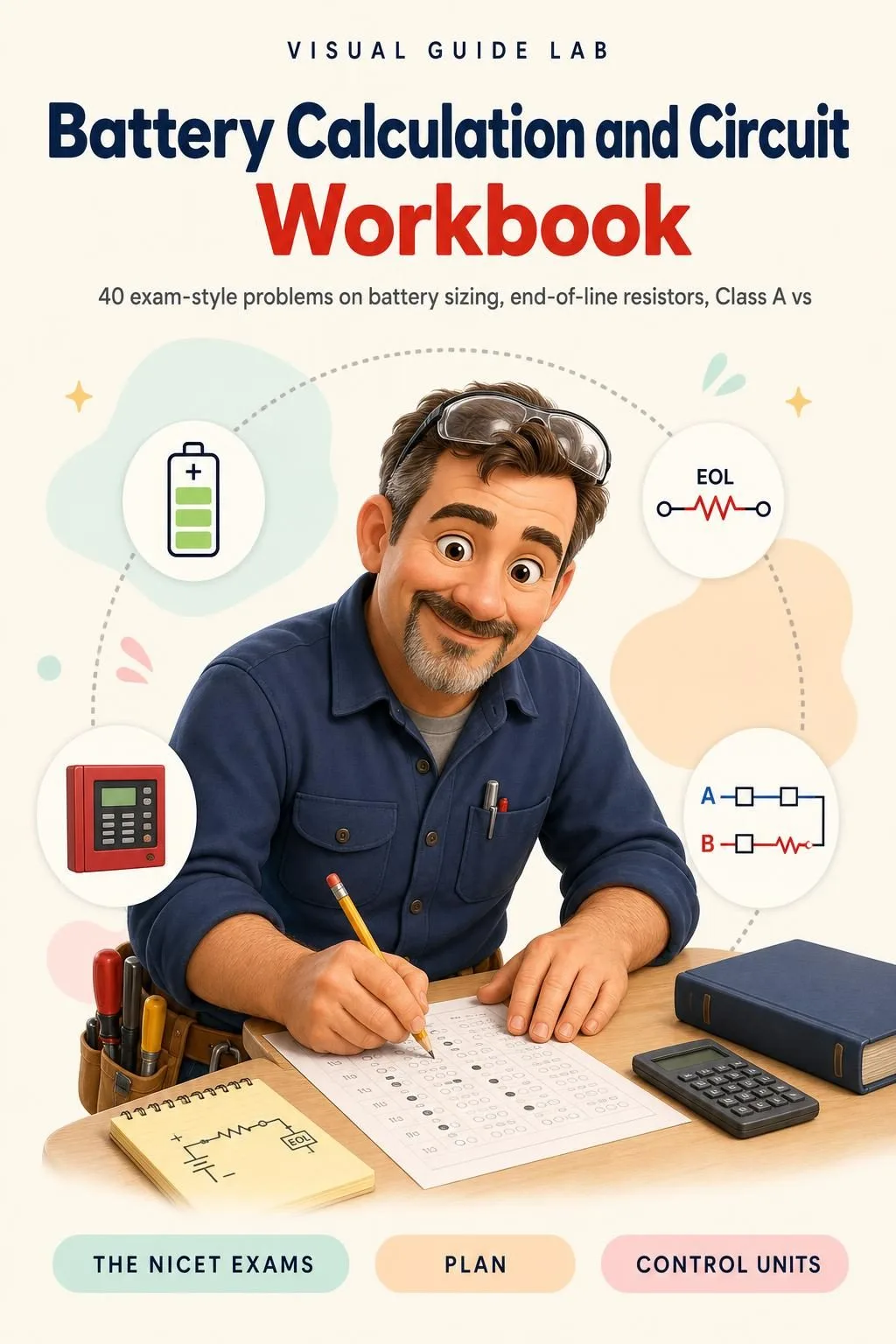
Battery Calculation and Circuit Workbook

BONUS 1: «Battery Calculation and Circuit Workbook»

Value on its own: US$ 17.90

40 exam-style problems on battery sizing, end-of-line resistors, Class A vs. Class B pathways and fault conditions, each one worked step by step so you can see exactly where your math went off.

250 Fire Alarm Terms on Cards

BONUS 2: «250 Fire Alarm Terms on Cards»

Value on its own: US$ 14.90

Printable cards with the term on the front and a one-line definition plus a tiny sketch on the back, for reviewing in short sessions between jobs.

The Fire Alarm Inspection Sketchbook + 2 Free Books

  • The Fire Alarm Inspection Sketchbook: 65 illustrated pagesUS$ 63
  • BONUS 1: Battery Calculation and Circuit WorkbookUS$ 17.90
  • BONUS 2: 250 Fire Alarm Terms on CardsUS$ 14.90
  • High-resolution PDF to printIncluded
Total value US$ 95.80
YOUR PRICE:
US$ 27
You save US$ 68.80
YES, I WANT THE FIRE ALARM INSPECTION SKETCHBOOK FOR US$ 27

📄 This is a digital PDF book sent to your email: nothing is printed or shipped.

Secure purchaseEncrypted payment30-day guarantee

PDF by email: The Fire Alarm Inspection Sketchbook reaches your inbox as a PDF, and the two free books come by email too. One-time payment, no installments or hidden costs.

Is This Book for You?

You're preparing for Level I

You're preparing for Level I

The control unit, devices, circuits and the battery calculation, one topic per page, to study at night after work.

Your test date is close

Your test date is close

A full drawn review of both outlines, plus a routine for knowing which chapter of NFPA 72 to open before the clock runs down.

You already inspect and test systems

You already inspect and test systems

A quick drawn reference for what you do every day, and the Level II interfaces: elevator recall, smoke control and releasing systems.

To Sum Up: Here Is What You Get

US$ 95.80US$ 27
YES, I WANT THE FIRE ALARM INSPECTION SKETCHBOOK FOR US$ 27

📄 This is a digital PDF book sent to your email: nothing is printed or shipped.

30DAYS
GUARANTEE

30-Day Guarantee

30-day guarantee: tell us what didn't work and we'll refund 100%.

You have 30 days to try The Fire Alarm Inspection Sketchbook and the two bonus books. If it doesn't work for you, tell us what didn't work and we'll refund 100% of what you paid. One-time payment, no subscriptions, no surprises.

Frequently Asked Questions

How do I get the material?

You get The Fire Alarm Inspection Sketchbook as a high-resolution PDF by email, to read on your phone or print. The two bonus books, “Battery Calculation and Circuit Workbook” and “250 Fire Alarm Terms on Cards,” also come by email.

Is it a monthly payment or one-time?

One-time payment of $27. No installments, no subscription.

Who is it for?

Fire alarm technicians and inspectors preparing for NICET Inspection and Testing of Fire Alarm Systems Level I or Level II, sprinkler techs adding fire alarm, electricians moving into fire alarm, and anyone retaking the exam. It's not the design and installation program. Check the index above for every topic.

What sources is it based on?

The NICET ITFAS Level I and Level II content outlines and exam information (exams updated October 7, 2024, nicet.org), checked against the NFPA 72 edition on NICET's reference list for each level. The book doesn't copy code text: it shows you where to look. Exam details can change, so always check nicet.org.

Is it official NICET or NFPA material?

No. It's an independent study guide. It is not affiliated with or endorsed by NICET, NFPA or any authority having jurisdiction. It doesn't give you a certificate or credits, and it doesn't count toward NICET work experience: it helps you study for the exam.

If I can use NFPA 72 on the exam, does this replace it?

No. You still need the NFPA 72 edition your exam references, your company's training, the manufacturer's instructions and your AHJ's requirements. The book helps you understand each system and know which chapter to open, so you spend less time searching.

Are the practice problems the real exam questions?

No. The 40 problems in the workbook are exam-style questions written for this book. They're not official NICET questions: they're there to help you practice.

Can I print it?

Yes. The PDF is made to print, so you can keep pages on your clipboard or in the truck.

What if I don't like it?

You have 30 days. Tell us what didn't work and we'll refund 100%.

One Last Thing Before You Decide...

You don't have to reread the same page hoping this time it sticks.

You don't have to memorize circuits and signals you can't picture.

And you definitely don't have to walk into the exam not knowing where to start.

There's a simpler way. And it's one click away. Now it's your turn.

One-time payment: US$ 27 · Guarantee: 30 days · PDF by email

YES, I WANT THE FIRE ALARM INSPECTION SKETCHBOOK FOR US$ 27

📄 This is a digital PDF book sent to your email: nothing is printed or shipped.